The value design brings to complex settings.
A final-year thesis at Gobelins, about ten interviews and two tools to help designers and decision-makers.
- Type
- Professional thesis
- Programme
- Gobelins · Digital Project Director / UX Manager
- Method
- Interviews, desk research, qualitative analysis
- Deliverables
- A card game and a decision tree
In 30 seconds, if you’re in a hurry
At the end of my programme at Gobelins, I questioned my design practice from a new angle.
Explore the value design brings to complex projects, to create practical tools.
A card game for decision-makers and a decision tree for designers, praised by a panel of professionals.
The context
After a year-long Digital Project Director / UX Manager programme at Gobelins, I questioned my design practice to approach it from a fresh, structured angle.
After months of observation within a design and consulting agency, my questions about the value of my work as a designer gave me my subject.
The goal
Through research, explore the value design brings to so-called complex projects or products, in order to create practical tools for designers and decision-makers.
My role & approach
Research, analysis, writing and layout, independently.
Explore
- A subject with many angles
- Two separate interview guides: designers and decision-makers
Interview
- Recruitment through my personal and professional network
- About ten interviews: agencies, consultancies, startups, scale-ups, founders, heads of design, design ops
Analyse
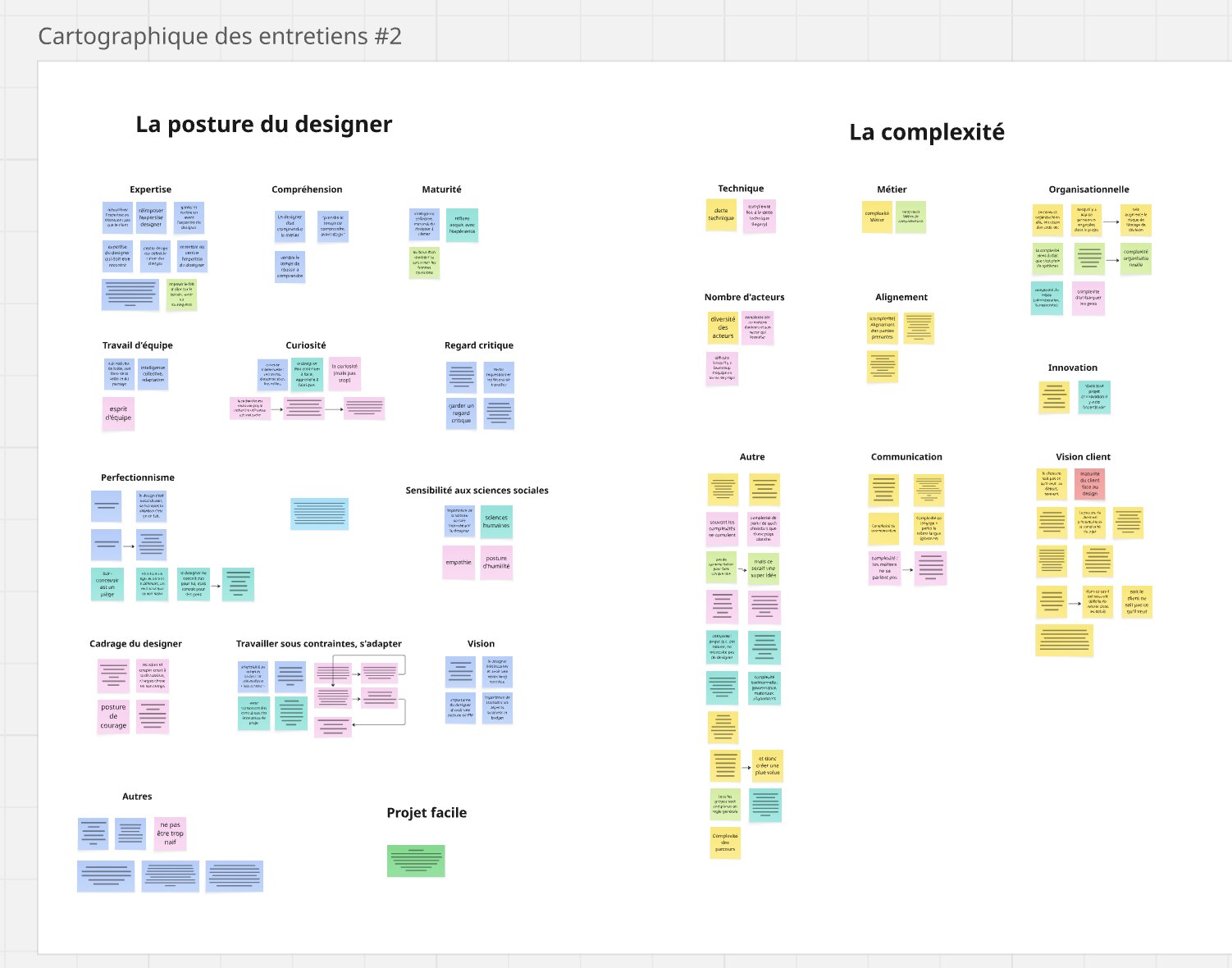
- Interview analysis: recordings, notes, a Miro board
- Desk research cross-checked with interviews to surface trends
Share
- Concise, illustrated writing, laid out in InDesign
- Two tools: a card game for decision-makers, a decision tree for designers
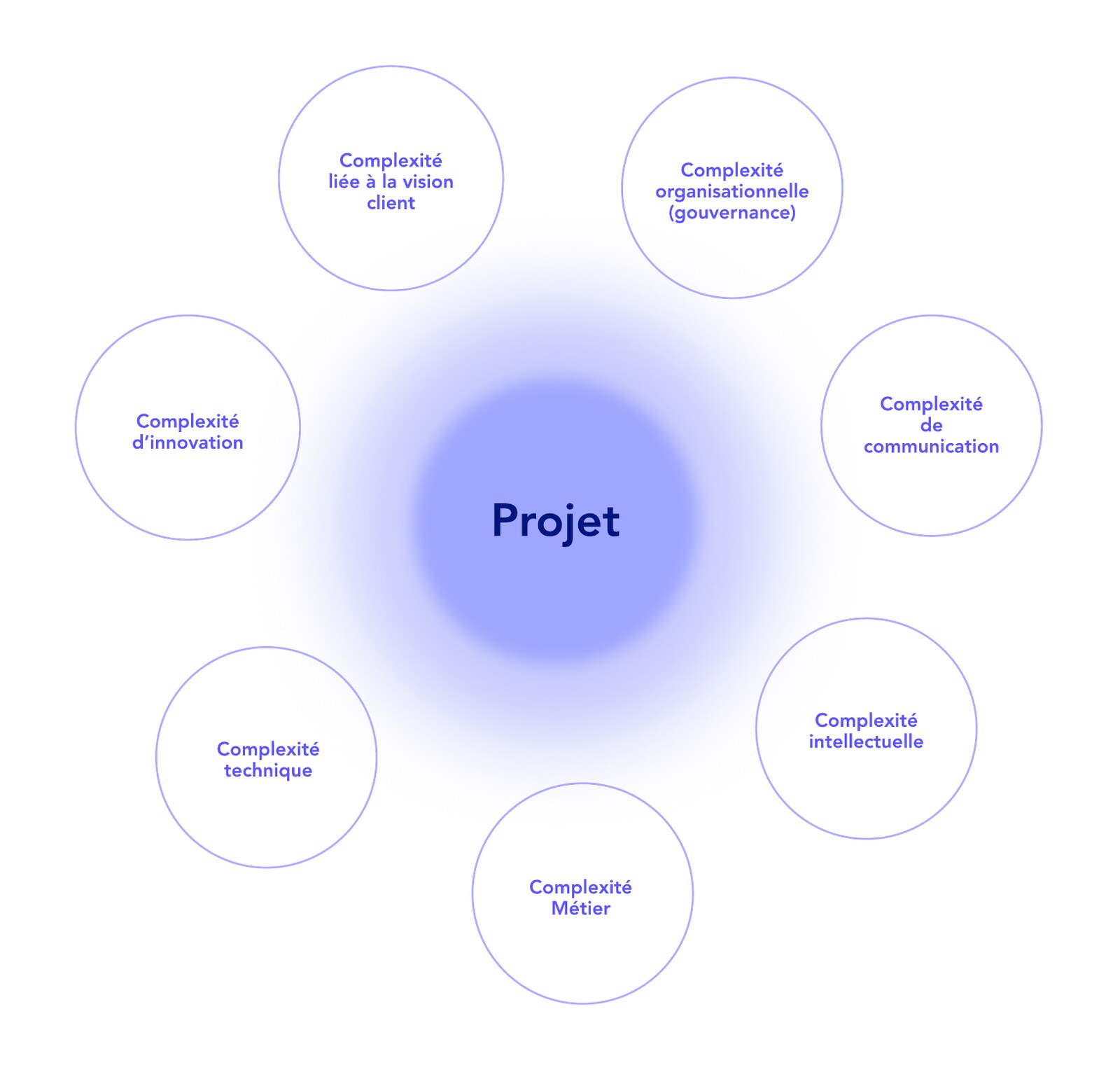
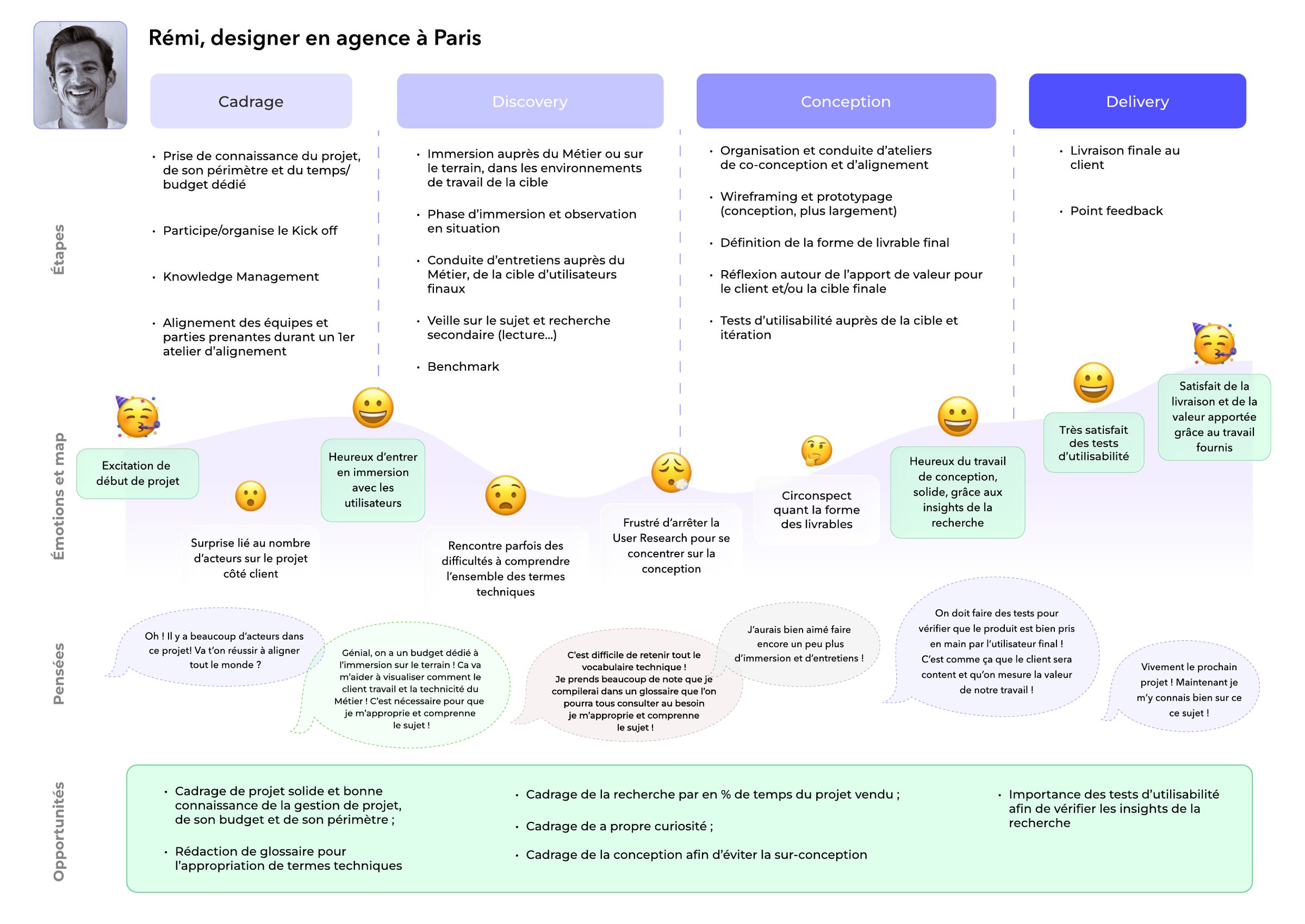
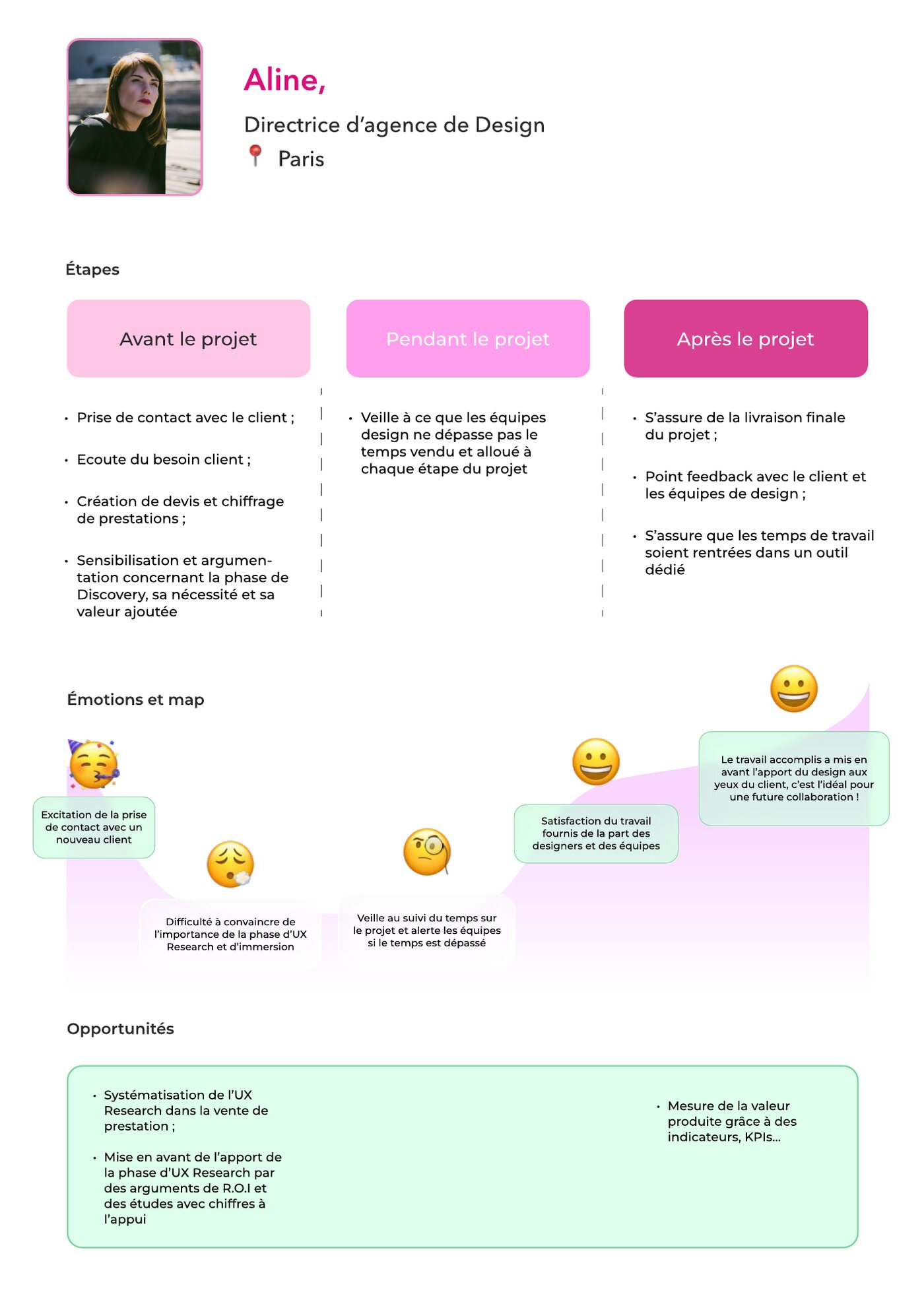
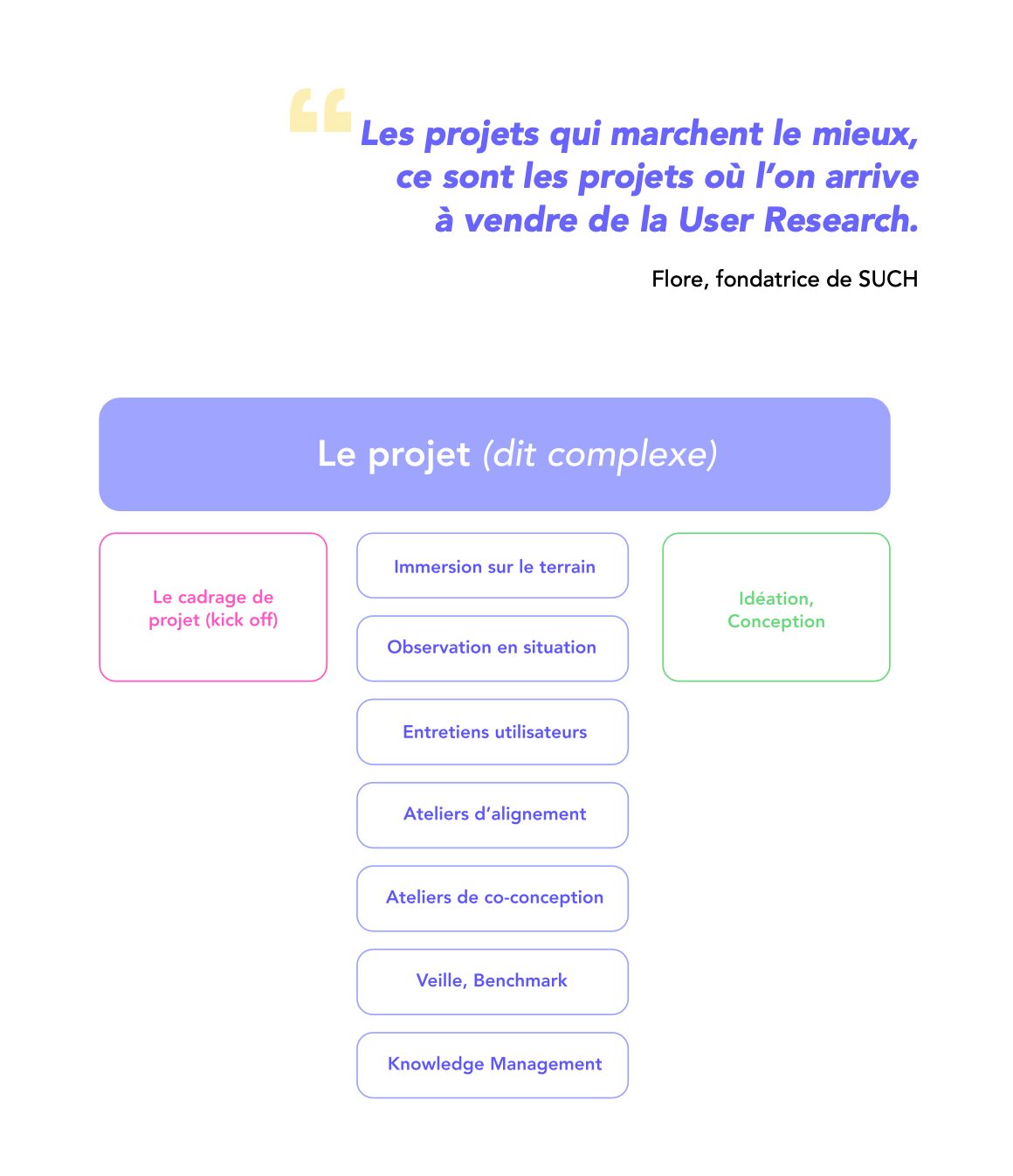
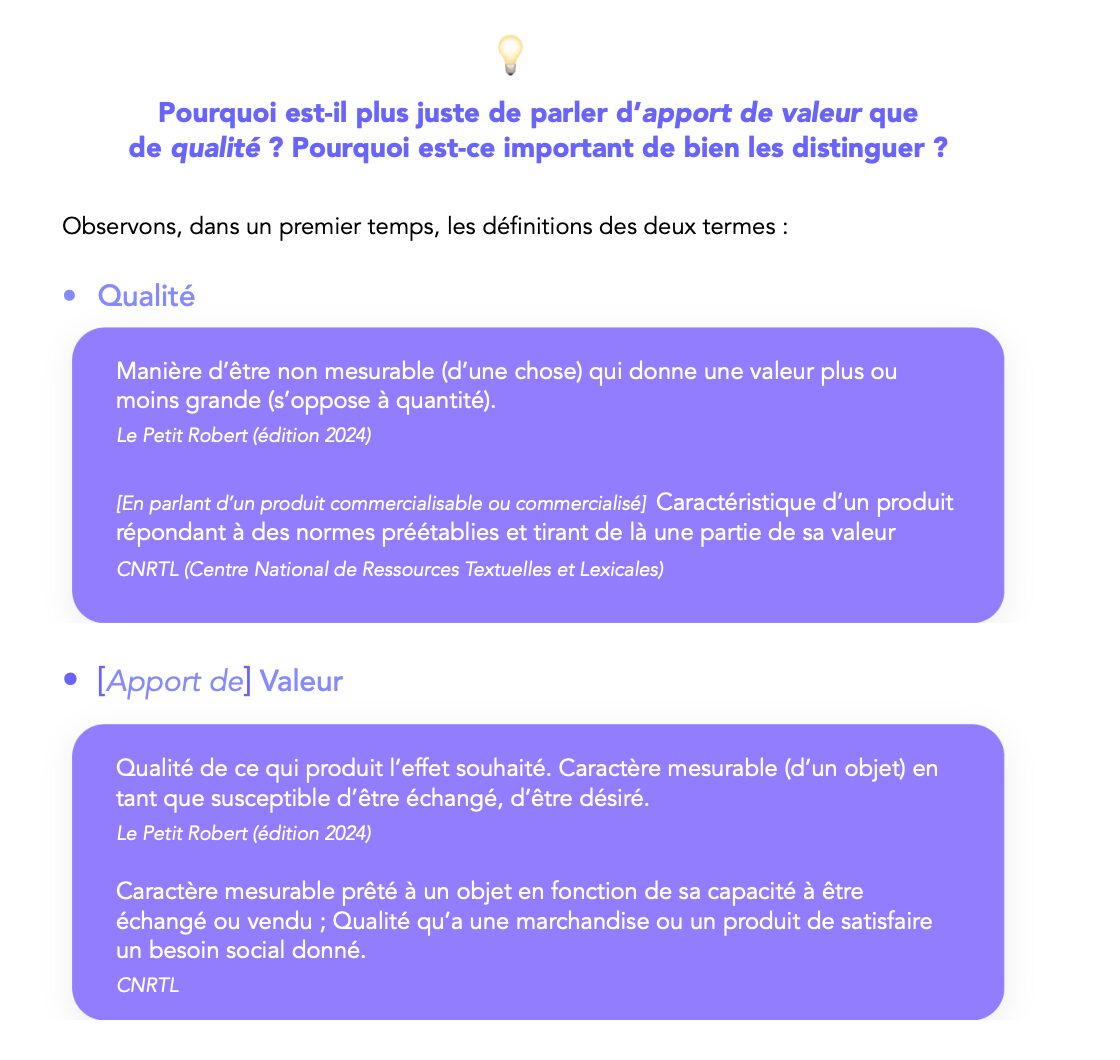
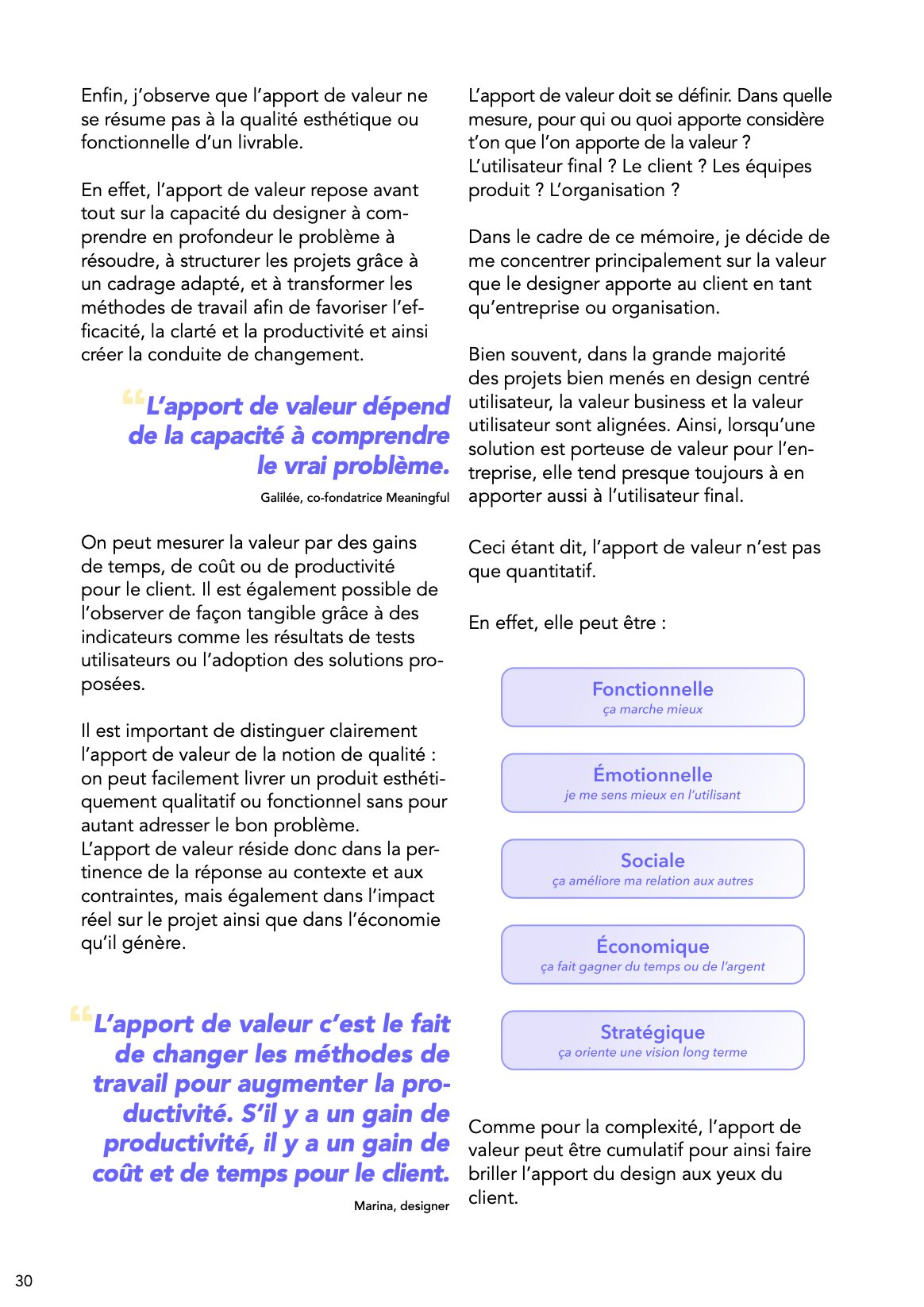
A card game to anticipate complexity.
Designed for decision-makers, it helps spot the forms of complexity in a project from the pre-sales stage, and answer them with the right design approach. Each card asks the key questions on the front and offers a reasoned solution on the back.
Hover or tap a card to flip itOverall, UX research is a long-term strategic investment.
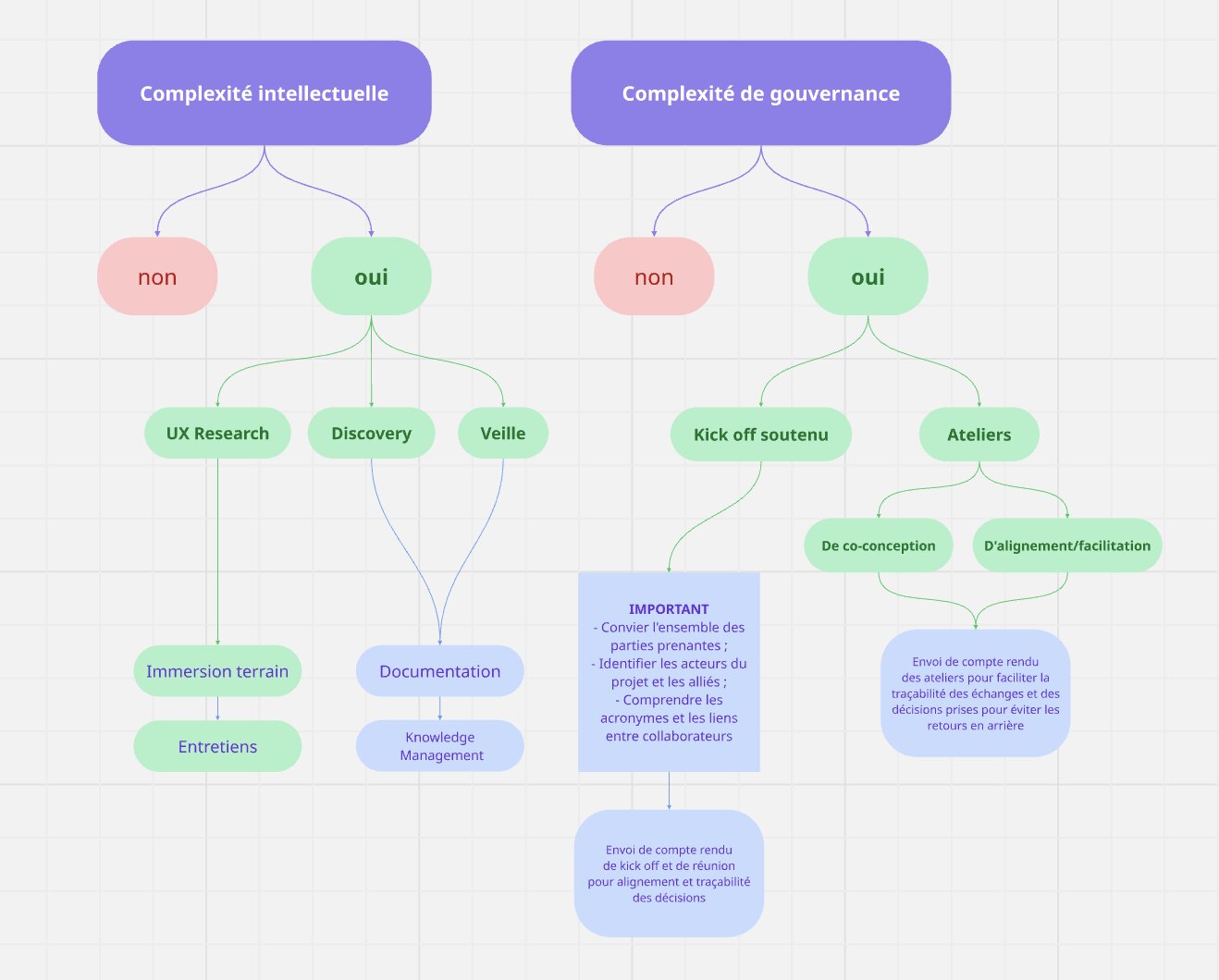
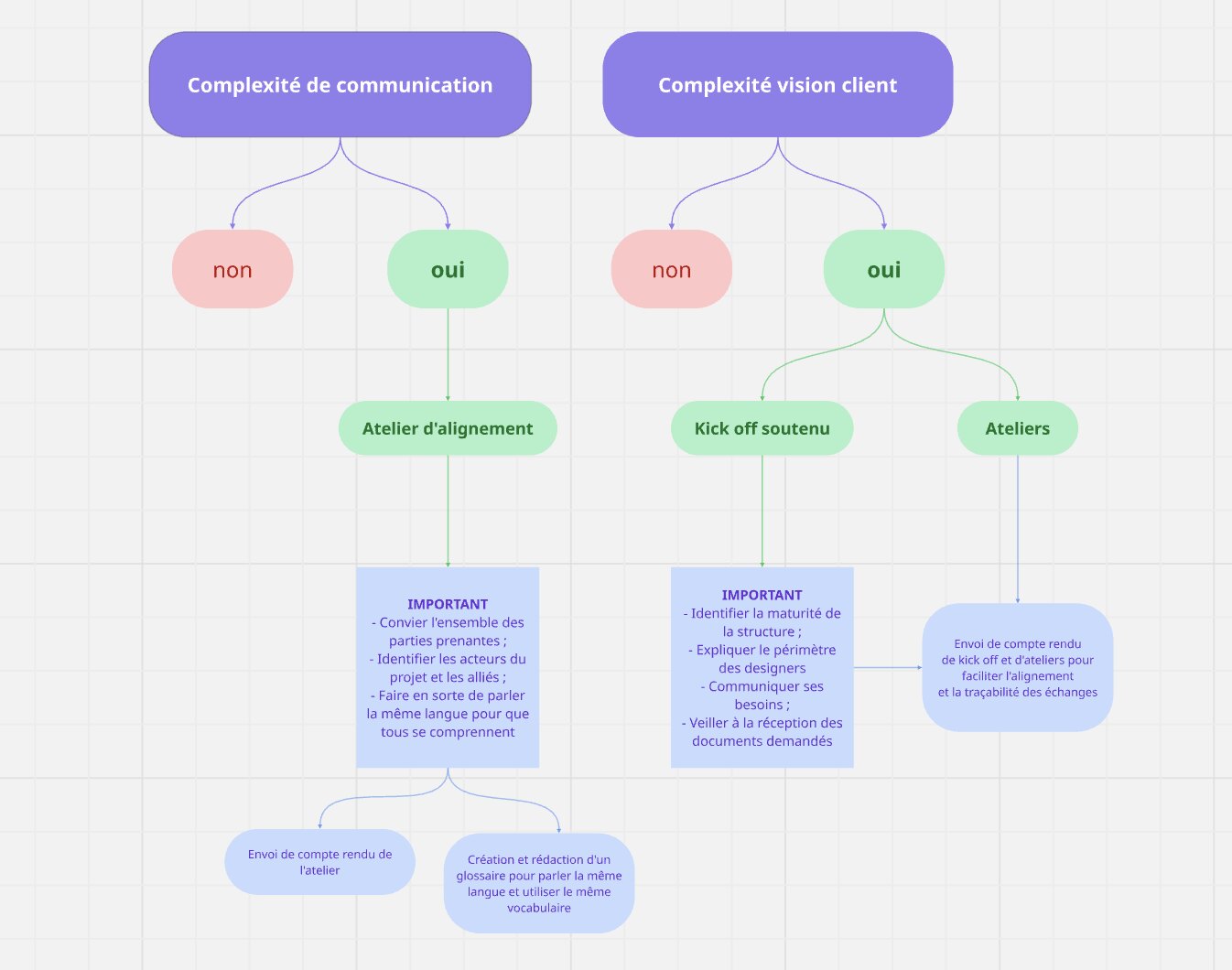
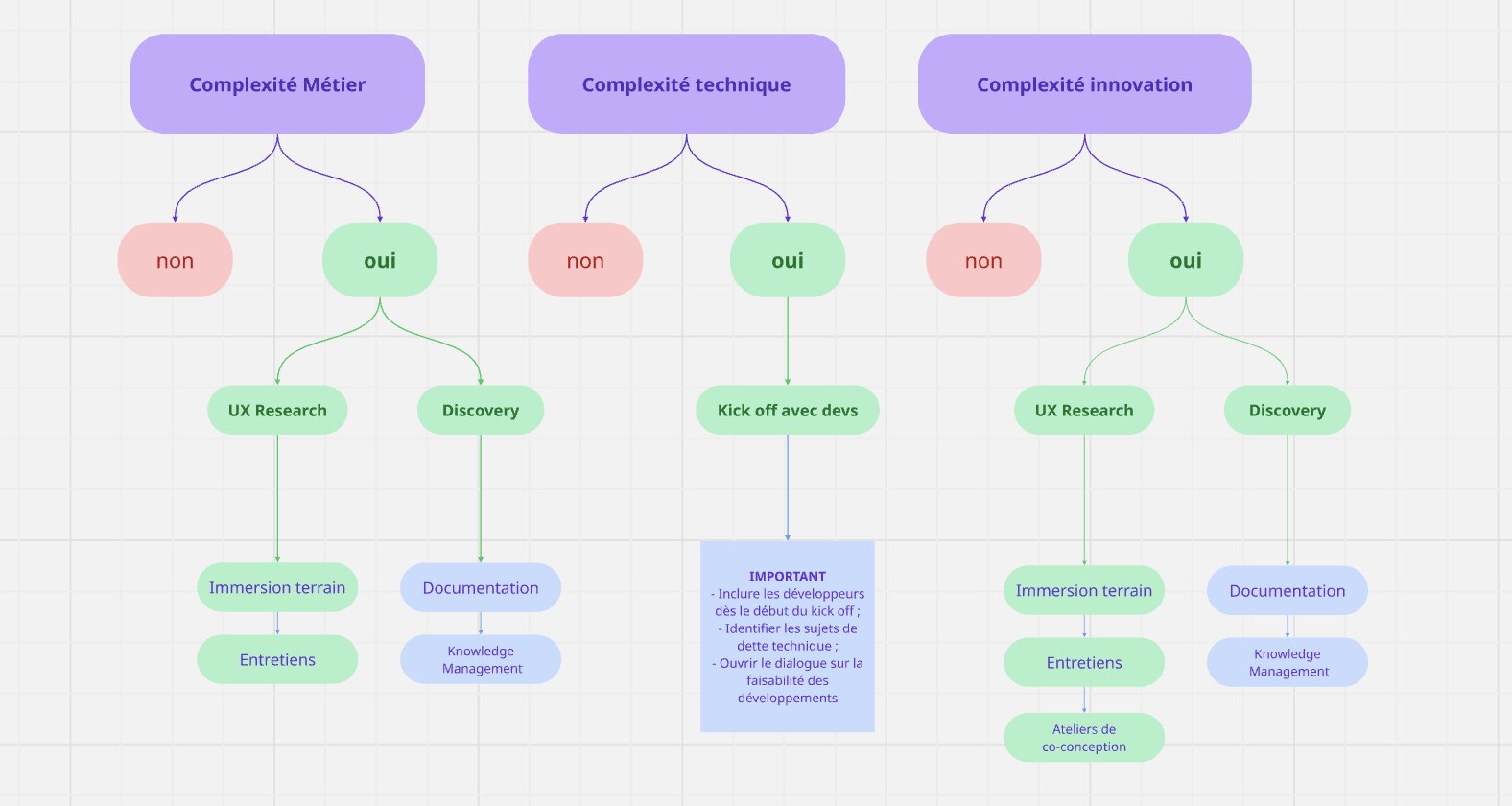
The decision tree: mapping complexity.
Scroll horizontally →The second tool, for designers: for each form of complexity, a yes / no path leads to the right approach. It builds on the interview mapping.
The outcome
- A card game helping decision-makers anticipate complexity, frame it and tailor how services are sold
- A decision tree helping designers respond to each situation and make proposals quickly
- Documented, illustrated, data-backed thinking
- A topical subject that applies to any kind of organisation
- Interviews grounded in the needs and practices of designers and decision-makers
What I took away
- Design practice varies with the organisation (agency, company) and way of working (project, product), and depends on the economic and social context
- Complexity takes many forms, often combined, and exists in every design project
- Some key steps are essential, but you must be ready to move beyond well-worn methods and keep questioning them to grow
Work praised by a panel of design professionals, sparking strong interest.
Peers want to continue and refine this research, and publishing the card game is being considered, to make it an everyday tool for design agency leaders.